Cleaning Up After a Storm: Yard Debris Tips
After a strong storm, it’s natural to want the yard back to normal right away. A little patience and a careful plan keep you safe while you clear branches, leaves and anything else the wind left behind.
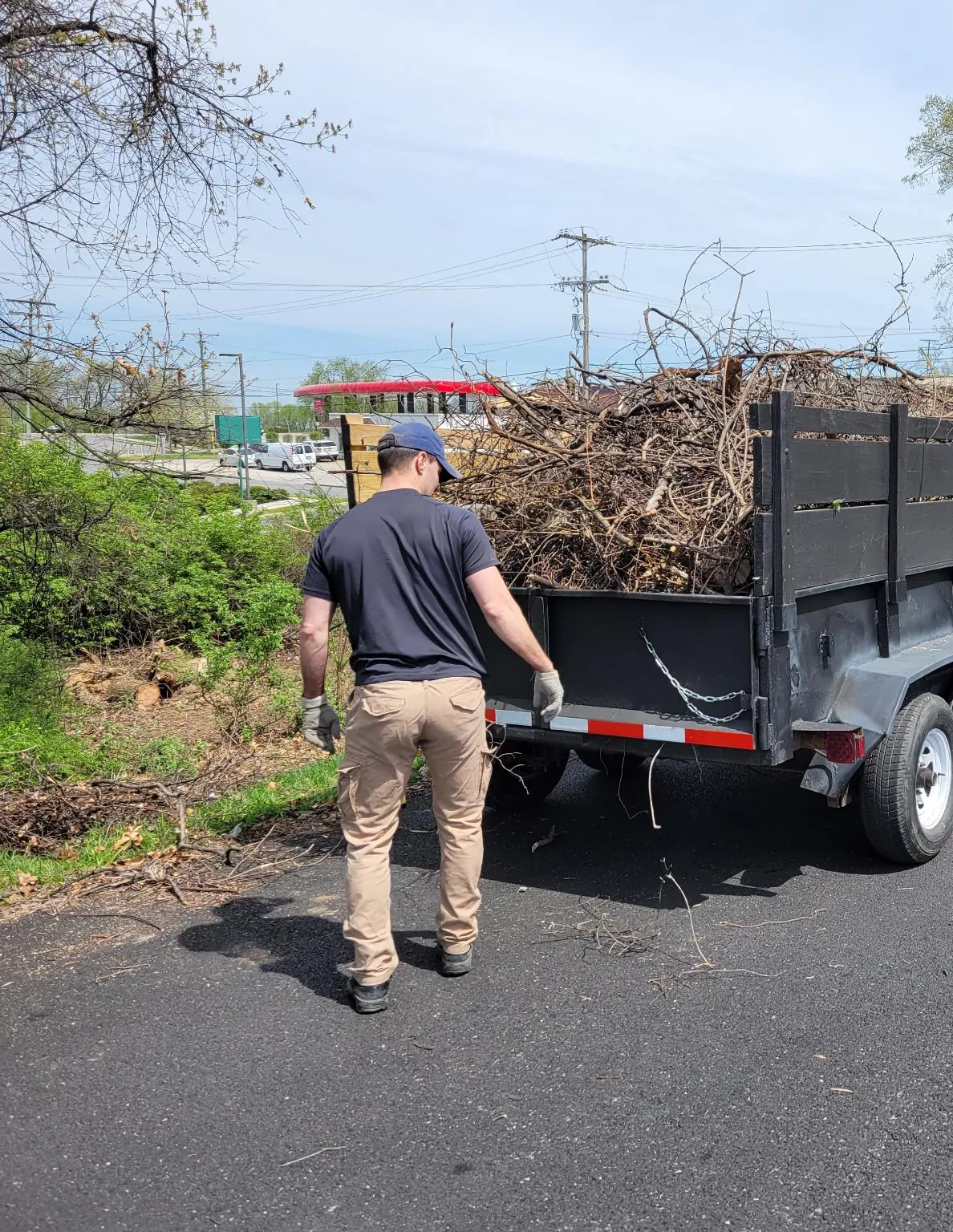
Safety before anything else
The first walk around the yard after a storm should be for looking, not lifting.
- Stay well away from downed power lines. Treat every fallen line as live, even if it isn’t sparking. Don’t touch it, and don’t touch branches, fences, puddles or vehicles that are in contact with it. Call your electric utility to report it, and keep children and pets away.
- Look up. Cracked or hanging limbs can fall hours or days later. Don’t work under them.
- Watch for hidden hazards under leaves and branches: nails from fence boards, broken glass, sharp metal and holes.
- Don’t climb onto the roof or up a ladder in wet, windy conditions.
- Leave large trees to professionals. A tree leaning on the house, tangled in wires or partly uprooted needs a qualified tree service, not a homeowner with a chainsaw.
Take photos before you clean up
Before you move anything, walk around and photograph the damage: the yard, the roof, the siding, fences, cars and anything that fell. Take wide shots and close-ups.
These photos can be useful if you contact your insurance company. Your insurer and policy determine what’s covered, so it’s worth checking with them about what they need before you clear large items. The same photos are also handy for getting a cleanup quote.
These photos can be useful if you contact your insurance company. Your insurer and policy determine what’s covered, so it’s worth checking with them about what they need before you clear large items. The same photos are also handy for getting a cleanup quote.
Sort as you go
Once it’s safe to start, a simple sorting system makes the job faster and helps with disposal later.
A word on chainsaws: they’re one of the most common causes of injury after storms. If you aren’t experienced, or the limb is under tension, bent, or tangled with other branches, leave it. Tension in a storm-damaged limb can release suddenly. Cutting overhead, from a ladder or near any wire is a job for a professional. It’s perfectly fine to leave a large limb where it lies and work around it until help arrives.
- Small branches and twigs: gather into a pile or bundle. Many municipalities have their own rules for yard waste, so check yours.
- Larger limbs: cut into manageable lengths only if you’re comfortable using the tools safely. Otherwise, stack them for removal.
- Leaves and soft debris: rake into piles or bags. Wet leaves get heavy quickly, so use smaller bags.
- Building materials: shingles, siding, gutters and fence pieces go in a separate pile. Watch for nails.
- Damaged belongings: outdoor furniture, trampolines, grills, sheds and their contents.
A word on chainsaws: they’re one of the most common causes of injury after storms. If you aren’t experienced, or the limb is under tension, bent, or tangled with other branches, leave it. Tension in a storm-damaged limb can release suddenly. Cutting overhead, from a ladder or near any wire is a job for a professional. It’s perfectly fine to leave a large limb where it lies and work around it until help arrives.
Pace yourself
Storm cleanup is heavy, repetitive work, often in heat or humidity. Older homeowners in particular should be careful.
- Wear sturdy gloves, closed shoes, long sleeves and eye protection.
- Lift with your legs, and don’t carry more than is comfortable.
- Work in short stretches and drink water.
- Ask neighbours or family to help with the heavy parts, and help them in return.
- It’s fine to leave the big pile for someone else to haul.
Helping an older parent after a storm
If your parent lives alone and a storm comes through, a quick check-in matters more than the cleanup itself.
- Call to make sure they’re safe, have power and heat or cooling, and aren’t planning to climb a ladder or drag branches.
- Ask them to send you photos of the yard and the house from a safe spot, or have a neighbour take a look.
- Remind them to stay away from any fallen wires and to call the utility if they see one.
- Check that walkways and the driveway are clear enough for them to get in and out safely, and for a car or ambulance to reach the house.
- If you’re out of state, arrange help for the heavy work rather than letting them tackle it alone. We can work with you through texts and photos.
When to call for help
Some cleanups are more than a homeowner should take on alone:
- Piles too big for the curb or for municipal collection
- Heavy limbs already cut but too heavy to move
- Damaged sheds, fences, playsets or hot tubs
- Waterlogged belongings from a flooded basement or garage
- Debris you need gone before an insurance adjuster, contractor or buyer visits
After the cleanup
- Walk the yard again once it’s clear, looking for damage you couldn’t see before.
- Check gutters and downspouts so the next rain drains properly.
- Look at trees that came through the storm. Cracked limbs or heavy leans are worth having checked.
- If a shed or hot tub was damaged, see our guide on getting rid of an old hot tub or shed.
Key takeaways
- Treat every downed power line as live: stay away and call your electric utility.
- Photograph the damage before you clear anything, and check with your insurer about what they need.
- Sort debris as you go, pace yourself, and get help for big piles or damaged structures.
Need a hand?
Junk Runner is a family-owned team in East Berlin serving York County. Text us a photo for a free quote, or see our Yard Debris Removal.
Related
Common questions
Yes. We offer storm cleanup and yard debris removal. Text us photos of the debris for a free quote.
Large fallen or leaning trees need a qualified tree service first. Once the wood is cut and safe to handle, we can haul it away.
Same-day pickups are possible when our schedule allows. After a big storm we can be busier, so text us photos as early as you can.