Getting Rid of Old Appliances Safely
Old appliances are heavy, awkward and often tucked into basements or tight kitchens. Some also contain materials that shouldn’t just go to the curb. Here’s how to get them out safely, with your back and your floors intact.
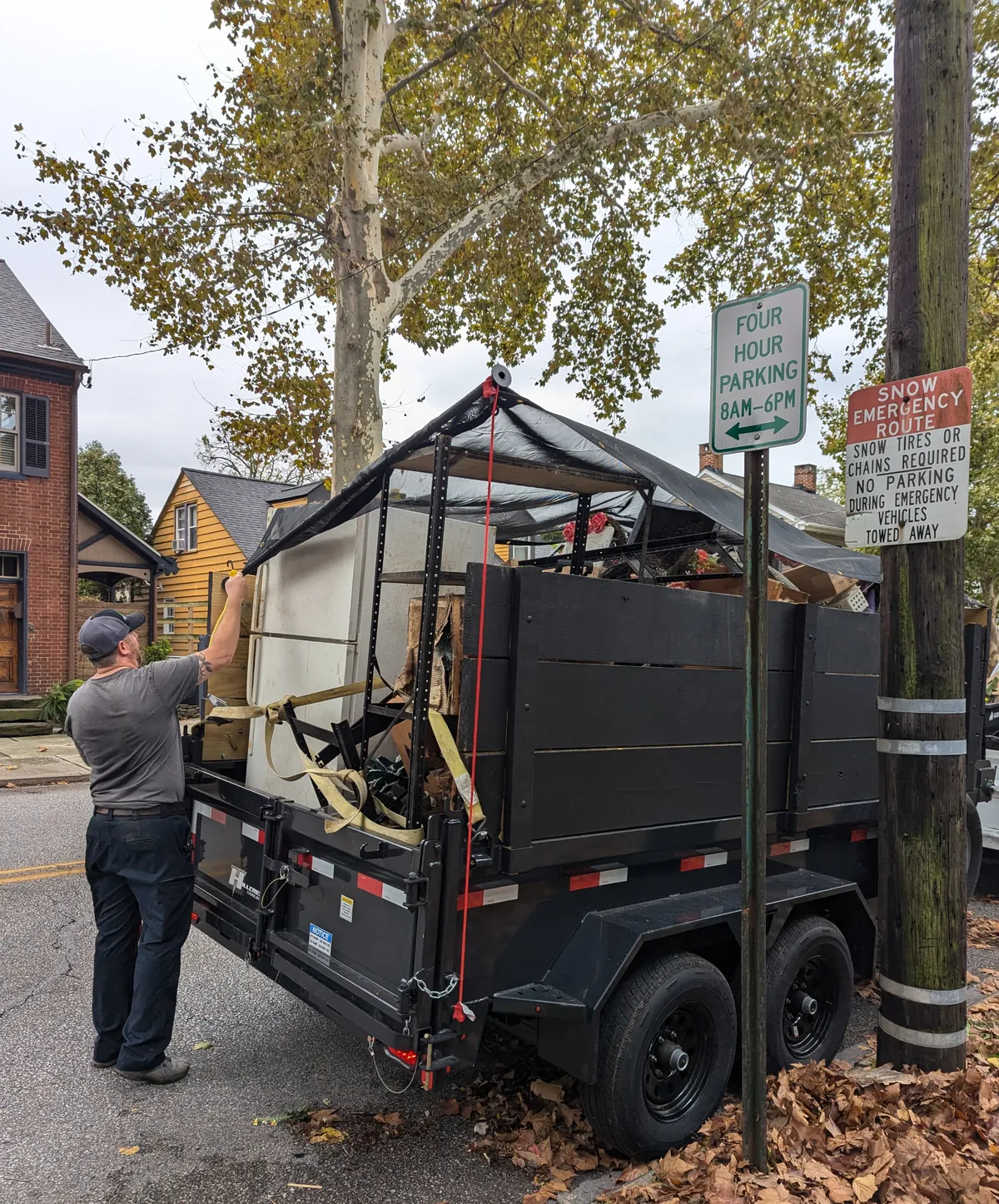
Decide: repair, reuse or remove
Before you remove an appliance, take a moment to decide whether it really needs to go.
- Still working well? A family member, neighbour or new homeowner may want it. Working appliances in good condition can sometimes be donated or rehomed.
- Working but inefficient? Very old fridges and freezers often use far more power than new ones. Many people find it’s time to let them go.
- Broken? If the repair would cost close to a replacement, removal usually makes sense.
Getting each type ready
Refrigerators and freezers
- Empty all food a day or two ahead and throw away anything spoiled.
- Unplug it and leave the doors propped open to defrost and dry out. Put towels down for the water.
- Turn off the water line if it has an ice maker or water dispenser.
- Remove loose shelves and drawers, or tape them in place.
- Tape the doors shut just before moving, so they don’t swing open.
- Turn off the water valves and unplug the washer. Drain the hoses into a bucket.
- For a gas dryer, have the gas line shut off and capped by a qualified professional. Don’t disconnect a gas line yourself.
- Clean out the lint trap and check the drum for forgotten items.
- Electric ranges often use a heavy-duty plug. Turn off the breaker before unplugging if you’re not sure.
- Gas ranges need the gas shut off and capped by a qualified professional before anyone moves them.
- Empty any water tray and unplug. Remove a window unit with two people, from the inside.
Why refrigerants need proper handling
Refrigerators, freezers, air conditioners, dehumidifiers and some water coolers contain refrigerants. These chemicals keep things cold, but they can harm the environment if released, so they need proper handling at disposal. That’s one reason these appliances shouldn’t be dumped, crushed or taken apart at home.
- Don’t cut or puncture the coils or lines on the back of a fridge or AC unit.
- Don’t lay a working fridge on its side for long periods if you plan to use it again.
- Don’t leave an old fridge outside with the doors on. Children can become trapped inside. If it has to sit outside, even briefly, take the doors off or tape them firmly shut.
Moving it without getting hurt
Appliances are some of the heaviest items in a home, and stairs make them harder. Many injuries during cleanouts happen with exactly these items.
- Never move a large appliance alone. Two people at a minimum, more on stairs.
- Use an appliance dolly with straps, not a regular hand truck.
- Protect the floors. Lay down cardboard or plywood over hardwood, vinyl and carpet.
- Measure doorways before you start. Sometimes a door has to come off its hinges.
- Clear the path of rugs, cords and furniture.
- Older homeowners shouldn’t do this part. It isn’t worth the risk of a fall or a back injury.
Smaller appliances and odds and ends
Big appliances get most of the attention, but kitchens, laundry rooms and basements often hold a collection of smaller ones too.
- Microwaves, toasters and coffee makers: unplug, empty crumbs and water, and wrap the cords. Working ones in good condition may be worth offering to family or donating.
- Dishwashers: turn off the water supply and power at the breaker before anyone disconnects it. If you’re not comfortable doing this, ask a plumber or handyman.
- Water heaters: these need the power or gas off, the water drained and the lines disconnected by a qualified professional before removal.
- Chest freezers in the basement: these are often the hardest of all, because they’re deep, heavy and at the bottom of narrow stairs. Defrost fully and send us a photo of the stairs.
- Space heaters and fans: check for damaged cords and don’t keep using anything that’s frayed or scorched.
Letting someone else handle it
For most households, especially seniors and families clearing a parent’s home, the simplest choice is to have the appliances removed. Junk Runner removes fridges, freezers, washers, dryers, stoves, dishwashers, AC units and more, including from basements and garages.
Text us a photo of the appliance and where it sits (a photo of the stairs helps) for a free quote. The cost depends on factors like the type and number of appliances, stairs or tight access and special disposal needs. We text a photo of our crew before we arrive, protect your floors and walls as we carry it out, and sweep up the spot where it stood. Find out more on our appliance removal page. If there are old TVs, computers or other electronics too, see electronics removal.
Text us a photo of the appliance and where it sits (a photo of the stairs helps) for a free quote. The cost depends on factors like the type and number of appliances, stairs or tight access and special disposal needs. We text a photo of our crew before we arrive, protect your floors and walls as we carry it out, and sweep up the spot where it stood. Find out more on our appliance removal page. If there are old TVs, computers or other electronics too, see electronics removal.
A quick safety checklist
- Unplug, and turn off water or have gas capped by a qualified professional.
- Empty, clean and dry it.
- Tape doors and loose parts.
- Clear and protect the path out of the house.
- Never leave an old fridge or freezer outside with doors on.
- Make sure refrigerant appliances go where they can be handled properly.
Key takeaways
- Unplug, drain and dry appliances ahead of time; have gas lines shut off and capped by a qualified professional.
- Fridges, freezers, AC units and dehumidifiers contain refrigerants that need proper handling, so never cut lines or dump them.
- Heavy appliances on stairs are a real injury risk. Use proper equipment and help, or have them removed.
Need a hand?
Junk Runner is a family-owned team in East Berlin serving York County. Text us a photo for a free quote, or see our Appliance Removal.
Related
Common questions
Yes. Please empty and defrost them first. We carry them out carefully and sort recycling from trash.
Yes. Send a photo of the stairs along with the appliance so we can plan and give you an accurate free quote.
Yes, please have the gas shut off and capped by a qualified professional before we arrive. We don’t disconnect gas lines.