Moving to Senior Living: What to Bring, What to Let Go
A move to senior living usually means going from a whole house to one or two rooms. The hardest part isn’t the packing. It’s deciding what comes along, and feeling all right about the rest.
Start with the new space, not the old house
It’s tempting to walk through the house and ask, “What do I want to keep?” A better first question is, “What will fit and get used in the new place?” That one change makes most decisions easier.
Get the floor plan. Ask the community for a floor plan with measurements, or visit with a tape measure. Note where the windows, outlets, closets and heating units are.
Ask what’s already provided. Some apartments come with a bed, a kitchenette or built-in storage. Some communities have rules about rugs, extension cords, small appliances or candles. Find out before you pack anything.
Map it out. Draw the room on graph paper, or mark furniture sizes on the floor of the current house with painter’s tape. Seeing a favourite recliner, a dresser and a bed side by side in the real footprint settles a lot of debates quickly.
What to bring: a short list that works
Every person is different, but most people settle in best with familiar things they use every day, plus a few that simply make it feel like home.
- Furniture: a bed (if not provided), one favourite chair, a small table, a dresser or chest, and a lamp or two.
- Kitchen: a couple of mugs, a few plates and bowls, everyday utensils, a favourite pan if there’s a kitchenette. Leave the full sets behind.
- Clothing: what gets worn now, for each season. Many people find they need far less than they think.
- Comfort items: a quilt, a few framed photos, a piece of art, a clock, a radio, a plant.
- Daily life: medications, glasses, hearing aid supplies, a mobility aid, a phone charger, important papers in one folder.
- Hobbies: one or two that will really continue, such as knitting supplies, a puzzle table or a few favourite books.
What to let go of, and how to make it easier
Most of a household won’t make the move. That’s normal, and it doesn’t mean those years didn’t matter. These are the usual categories:
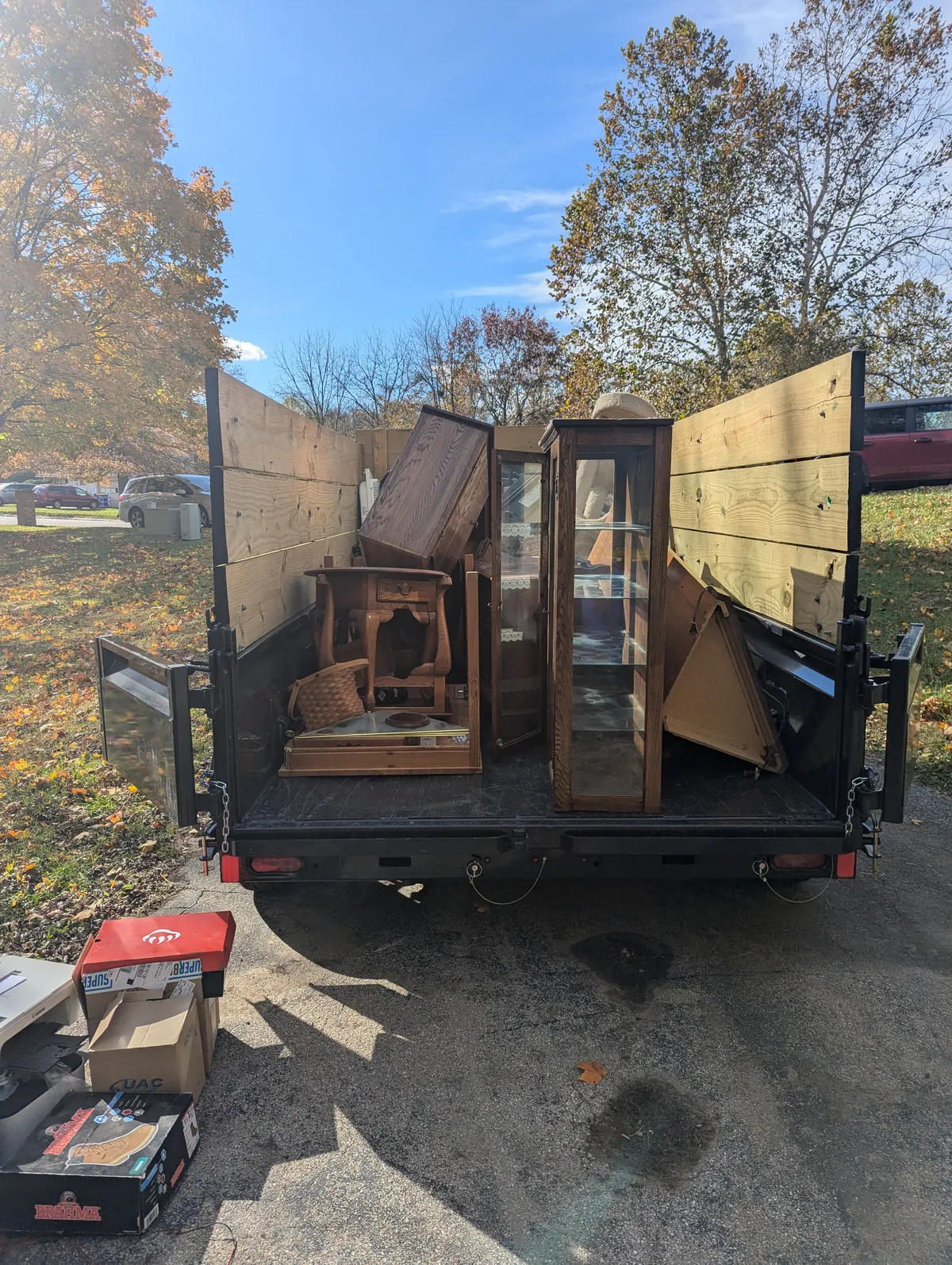
- Large furniture: dining sets, guest beds, china cabinets, sectional sofas
- Duplicates: extra dishes, linens, small appliances, tools
- Holiday decorations beyond a small box of favourites
- Garage, shed and basement contents: yard tools, paint, old lumber, exercise equipment
- Years of magazines, catalogues and paperwork (keep important documents, and check with the family’s attorney or accountant before shredding anything financial or legal)
- Photograph it. A picture of the piano or the workbench keeps the memory without the floor space.
- Tell the story. Record a short voice note about where something came from. Families treasure these later.
- Offer it to family first, with a deadline. “If you want Grandma’s cedar chest, please pick it up by the 15th.” A date keeps things moving without arguments.
- Know it’s going somewhere. Many people find it easier to let go when good items are donated or rehomed instead of thrown away. Our guide on sorting what to donate, recycle or toss can help.
A simple timeline
Moves go better when they’re spread out. If you have a few months, this rough plan works for most families:
- Two to three months out: get the floor plan, talk through what matters most, and start with the easy rooms (guest room, basement, garage).
- Six to eight weeks out: decide on furniture for the new place. Let family know what’s available and when to collect it.
- Four weeks out: pack the things that are coming along, room by room, and label each box with where it goes in the new space.
- Two weeks out: book help for the move itself and for clearing what’s left. Confirm the move-in date with the community.
- Moving week: move first, clear the house after. There’s no need to empty the house while someone is still living in it.
Moving day, and the house left behind
On moving day, try to set up the new room before anything else. Make the bed, hang a few photos and put the favourite chair by the window. Walking into a room that already feels familiar makes the first night much easier.
Then turn to the house. Once family has taken what they want, the rest can be cleared in one visit. At Junk Runner, you can text us photos of the rooms for a free quote. We set a weekday that works around the closing or listing date, text a photo of our crew before we arrive, do all the lifting, set aside good items to donate or rehome, sort recycling from trash and sweep up before we leave. If you’re helping from out of state, we keep you updated with texts, photos and video chats. You can read more about our downsizing cleanouts and moving cleanouts.
Then turn to the house. Once family has taken what they want, the rest can be cleared in one visit. At Junk Runner, you can text us photos of the rooms for a free quote. We set a weekday that works around the closing or listing date, text a photo of our crew before we arrive, do all the lifting, set aside good items to donate or rehome, sort recycling from trash and sweep up before we leave. If you’re helping from out of state, we keep you updated with texts, photos and video chats. You can read more about our downsizing cleanouts and moving cleanouts.
Helping from a distance
Many adult children are juggling a parent’s move from another state. A few things make it easier:
- Ask the community for a contact person you can call or email about move-in details.
- Use video calls to walk through rooms with your parent and decide together what comes along.
- Ask a local friend or neighbour to be on hand on moving day.
- Arrange the house clear-out with a crew that can share photos and updates, so you can see the progress without travelling twice.
Looking after the feelings, too
Leaving a home can bring up grief, relief, worry and gratitude, sometimes in the same afternoon. Go slowly with the sentimental rooms. Take breaks. Let your parent lead on the decisions that are theirs to make, and save the practical debates for later.
If the move hasn’t been agreed yet, our guide on talking to a parent about downsizing has some gentle ways to start the conversation.
If the move hasn’t been agreed yet, our guide on talking to a parent about downsizing has some gentle ways to start the conversation.
Key takeaways
- Plan from the new floor plan outward: if it doesn’t fit or won’t be used, it can stay behind.
- Bring familiar everyday items and a few comforts; let duplicates and large furniture go.
- Set up the new room first, then clear the house afterwards, on a timeline that fits your family.
Need a hand?
Junk Runner is a family-owned team in East Berlin serving York County. Text us a photo for a free quote, or see our Downsizing Cleanouts.
Related
Common questions
Usually just the essentials: a bed if one isn’t provided, a favourite chair, a small table, a dresser and a lamp. Measure the new room and check what the community provides before deciding.
After is usually easier. Move your parent into the new place first, let family collect what they want, then clear the rest. Junk Runner can quote the clear-out from photos you text us.
Yes. We work with out-of-state family through texts, photos and video chats, so you can see what’s happening without being there.